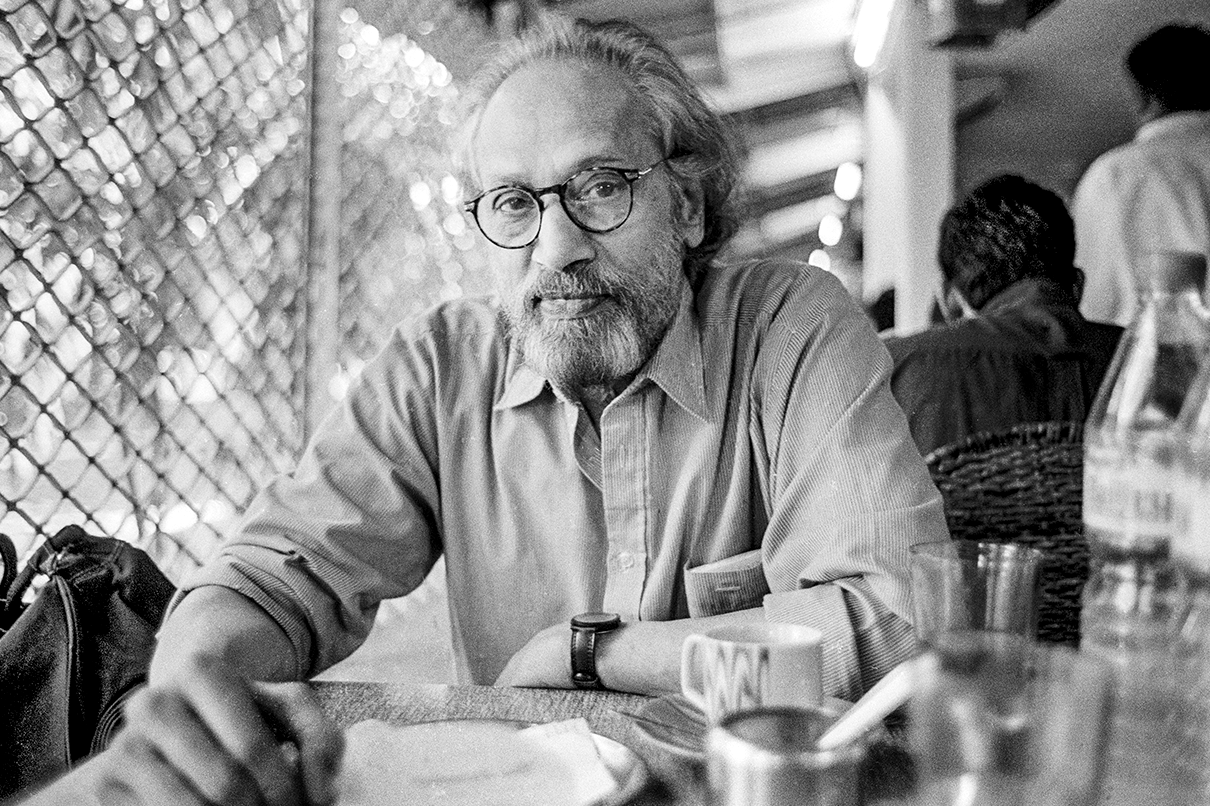
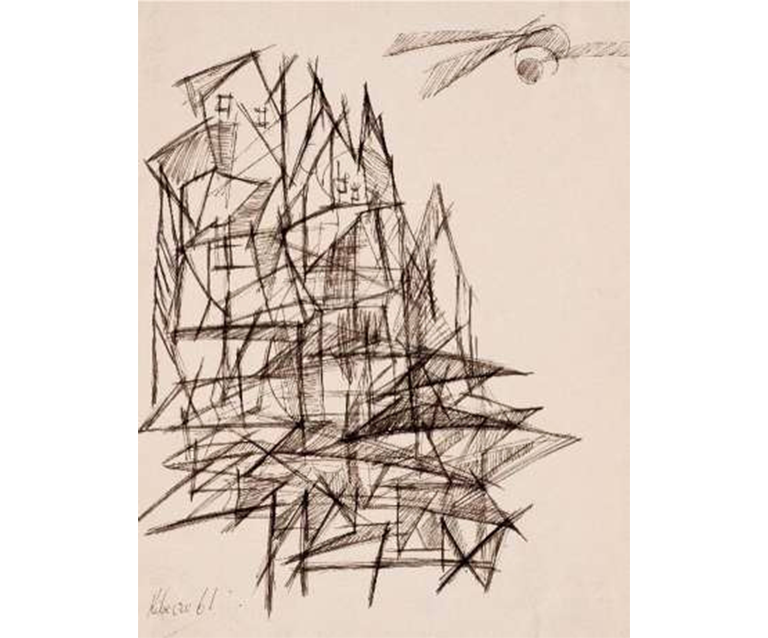
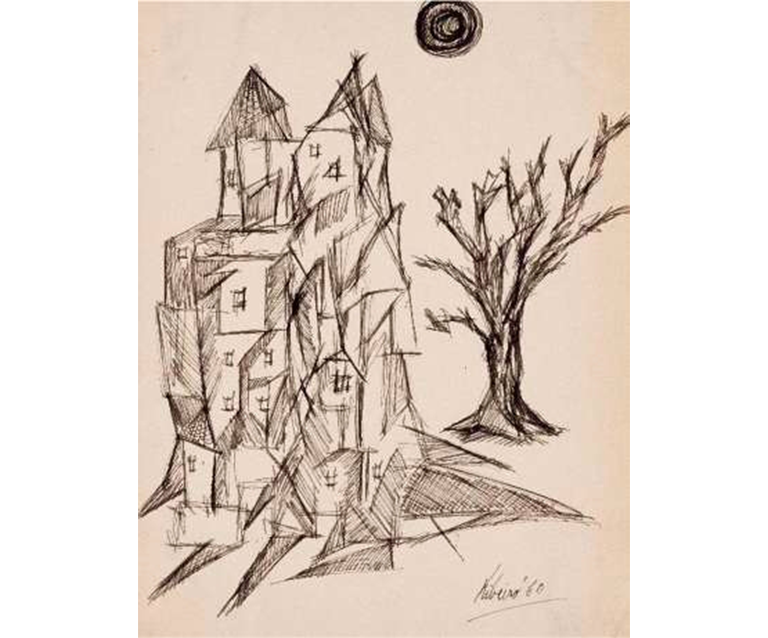
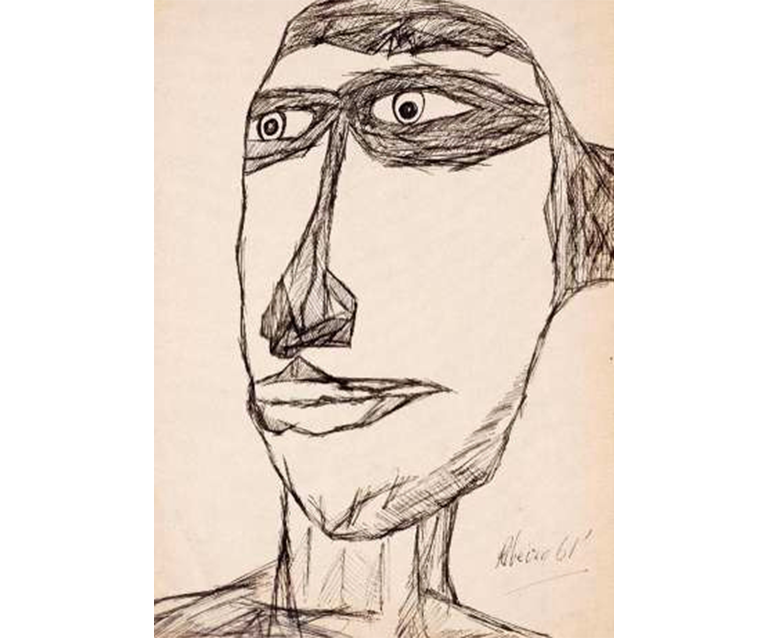
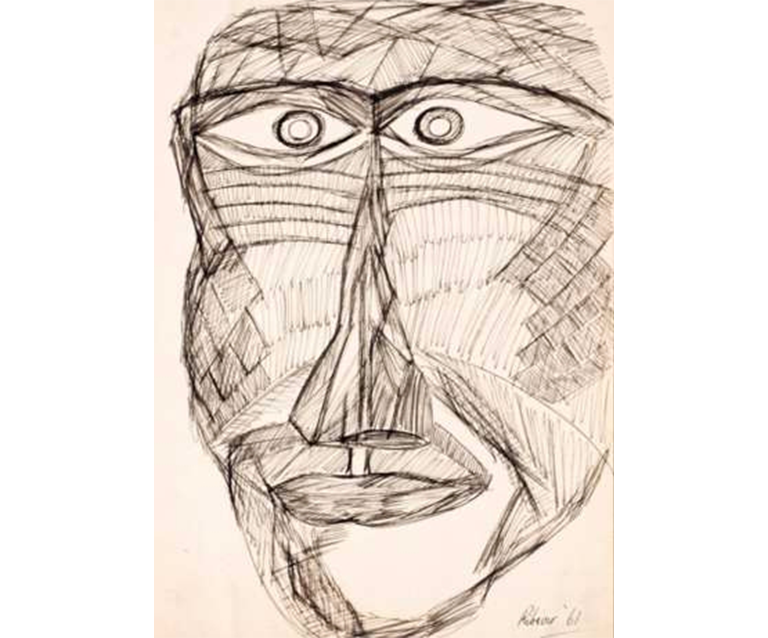
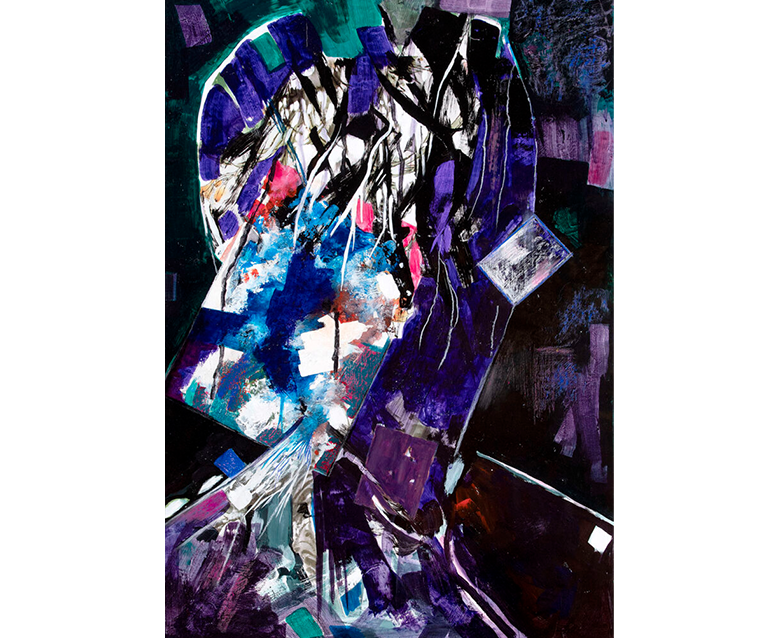
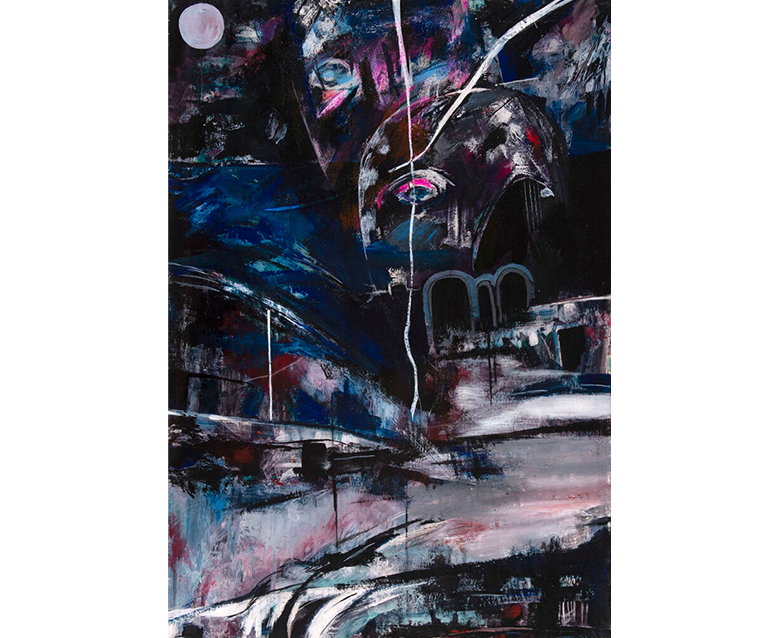
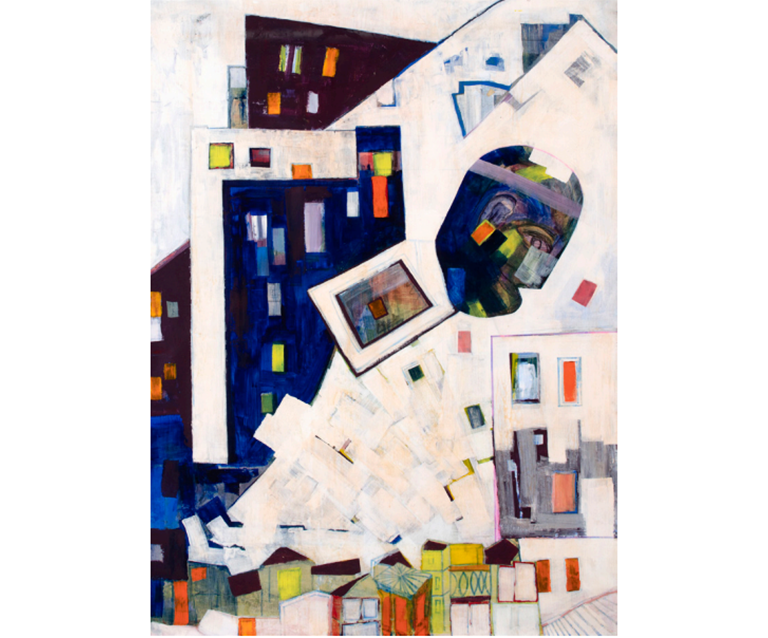
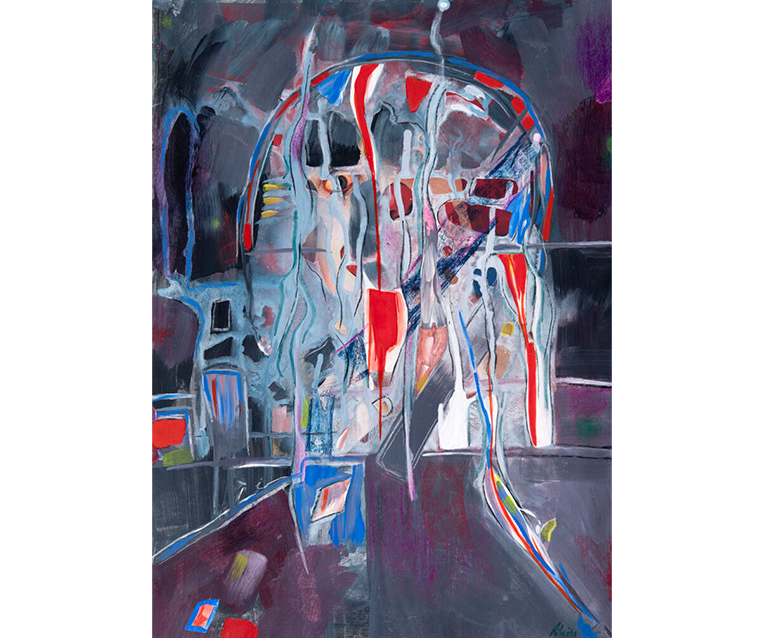
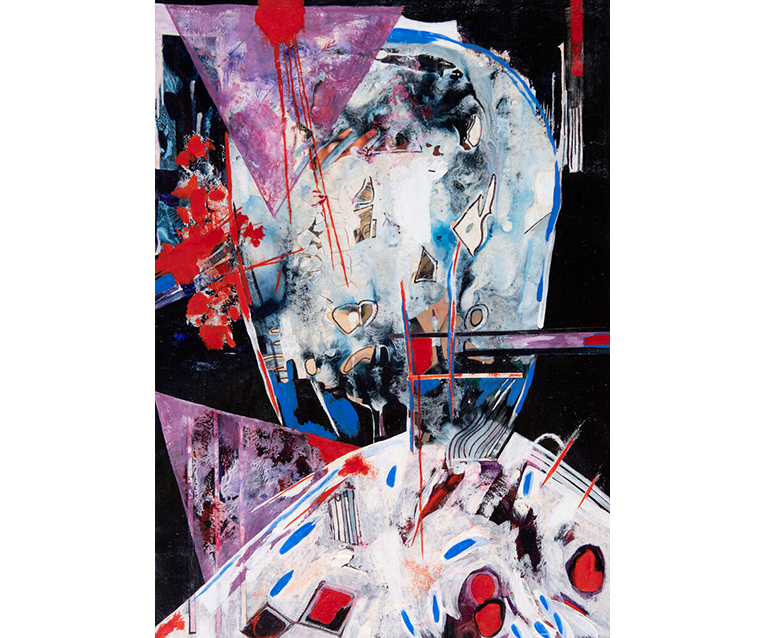
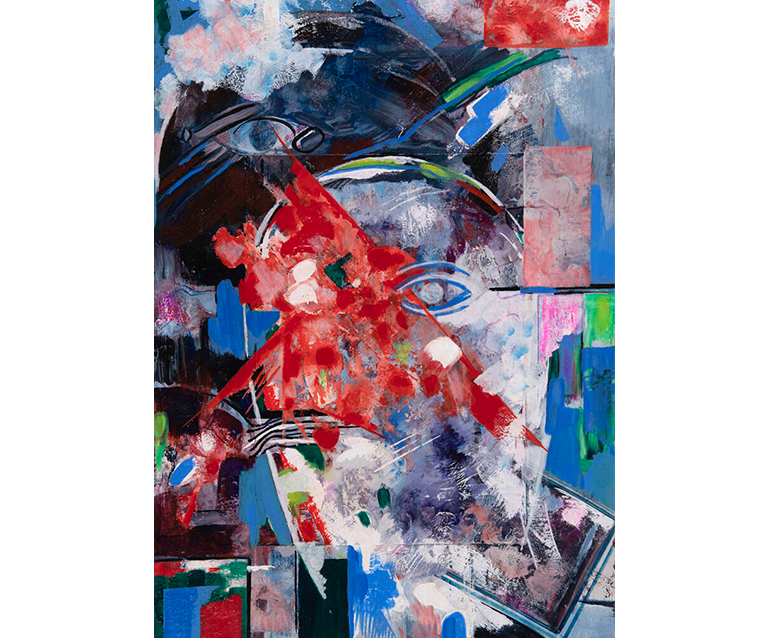
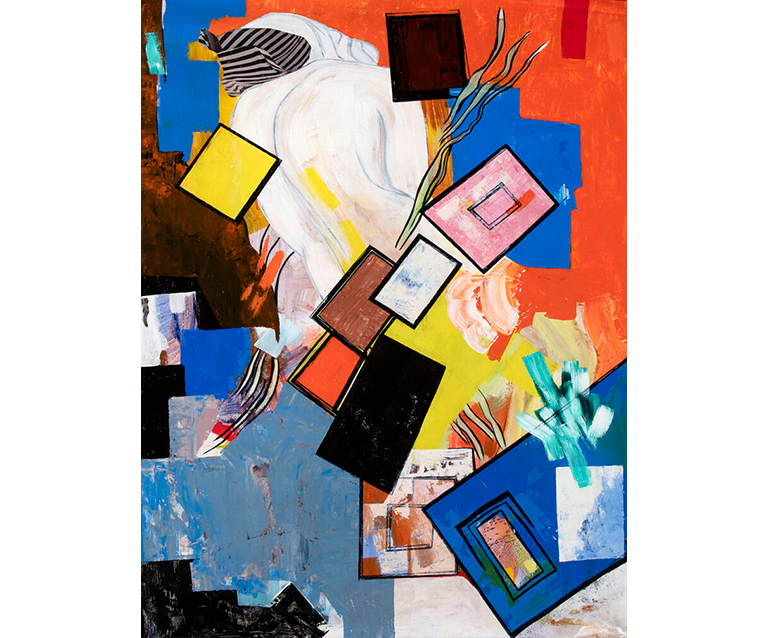
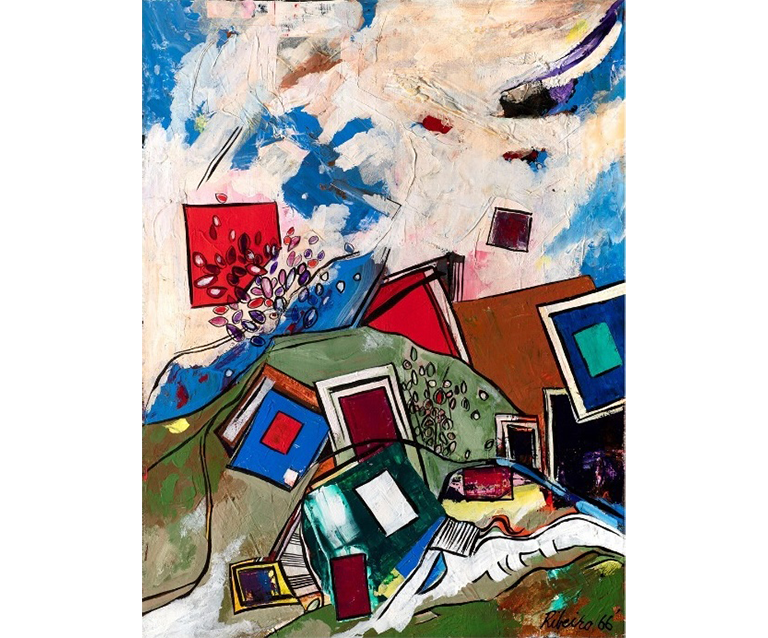
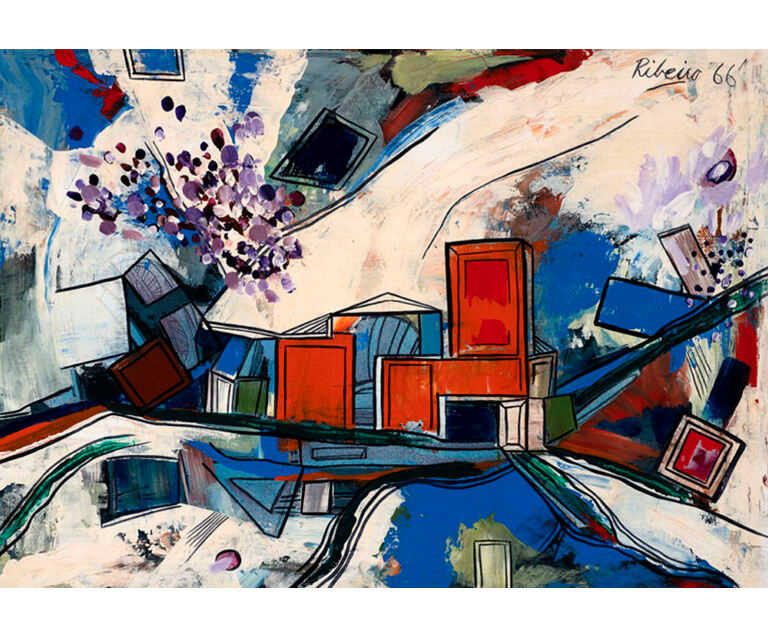
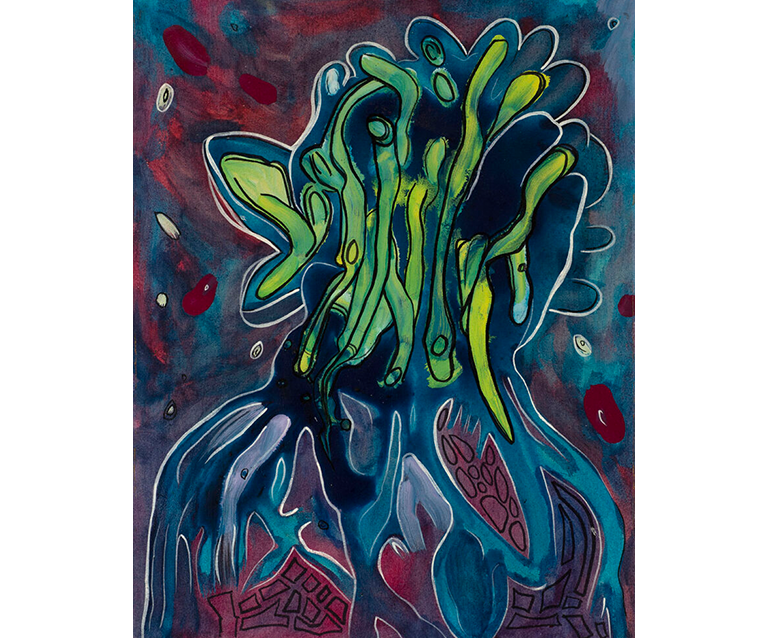
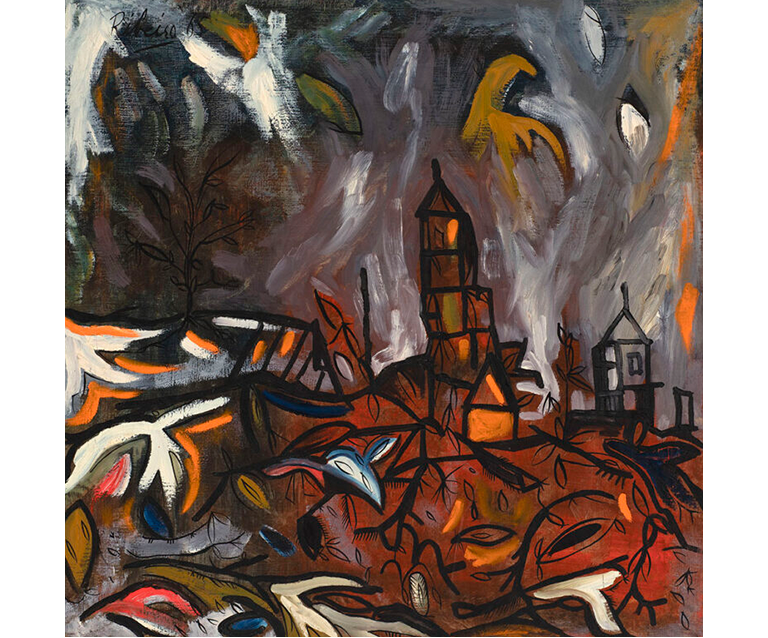
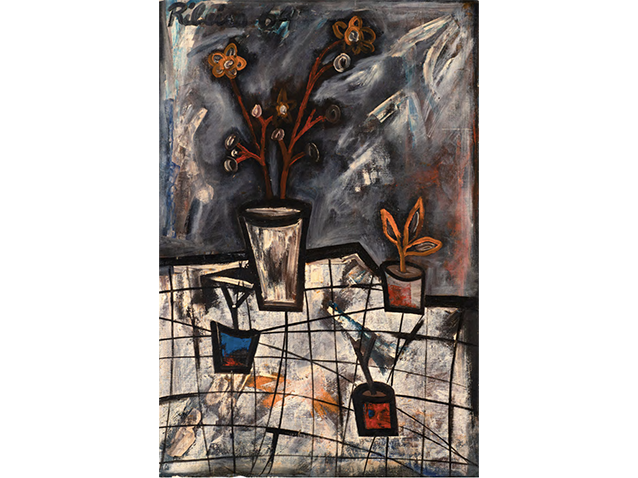
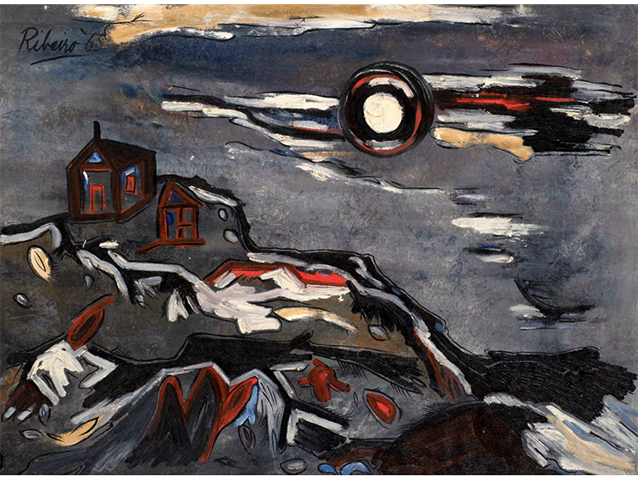
The Indian Expressionist painter, Lancelot Ribeiro was born in Mumbai in 1933 where helived with his family, including his older brother – the well-known artist, FN Souza.
The family split their time between Bombay and their ancestral home of Goa, which wasthen a Portuguese colony on India’s west coast. Goa’s landscape and Roman Catholicheritage left a deep imprint on Ribeiro’s visual language and artistic consciousness.
In 1950, aged sixteen, he travelled to post-war Britain to study accountancy but soon started pursuing creative interests, including life drawing at Saint Martin’s School of Art.
He was also writing poetry. However, conscription in force at the time meant he had to endure National Service – as a ‘British Subject’ – in the Royal Air Force.
Securing compassionate leave, Ribeiro returned to India in 1955 and worked in life insurance. He still though aspired to become a poet. Painting, he said, happened accidentally.
His first solo exhibition was at the Bombay Artist Aid Centre in 1961 and was an instant sell-out. It launched his career as a painter and won him a commission from Tata to paint a mural for the offices of J.R.D Tata, as well as collector interest.
This included Rudi von Leyden, Walter Langhammer and Emanuel Schlesinger who had helped develop India’s nascent modern art scene.
By end-1962, before moving to Britain, Ribeiro had ten solo and group shows – including Ten Indian Painters, sponsored by the Indian Writers Association and UNESCO which toured across India, North America and Europe.
With three fellow painters, he co-founded the Indian Painters Collective UK (IPC) in 1963, the first informal body of its kind outside of India. Over its 25-year history, the IPC advocated for artists from the subcontinent, eventually evolving into Indian Artists UK (IAUK).
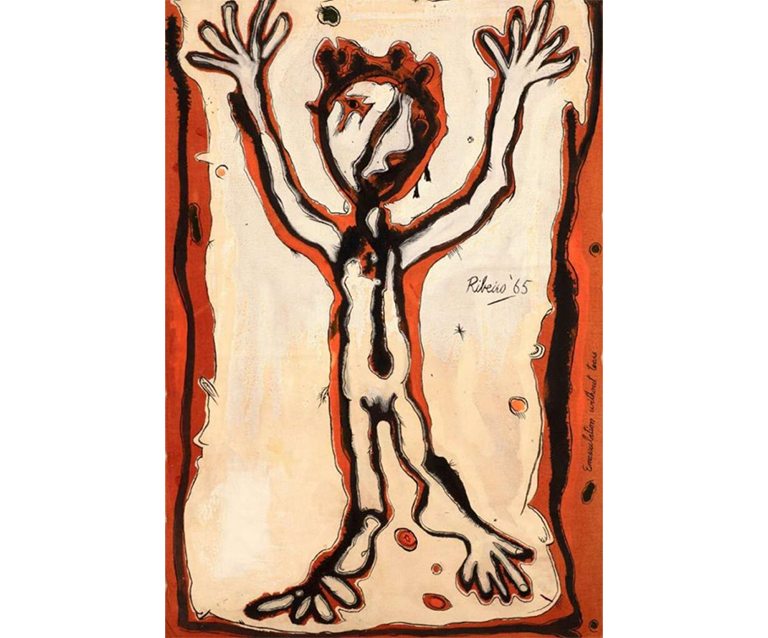
His pioneering experimentation with polyvinyl acetate (PVA) and conventional oils positioned him as “a godfather to geneations of artists using acrylics as an alternative to oils” (The Times, 2011).
A prolific and inquisitive individual, Ribeiro’s prodigious output is wide ranging and innately experimental in medium, style and form. Throughout his career, he never restricted himself to a particular style, medium or content. In 1972 – at a Commonwealth Institute lecture – he reflected on the impulses which drove his work, a sentiment that could equally be used to convey a lifelong philosophy.
– Marsha Ribeiro