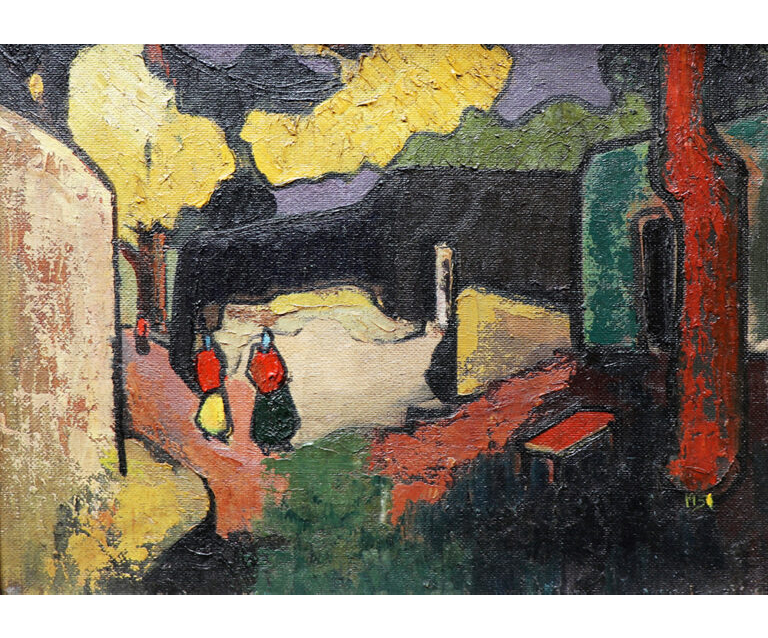
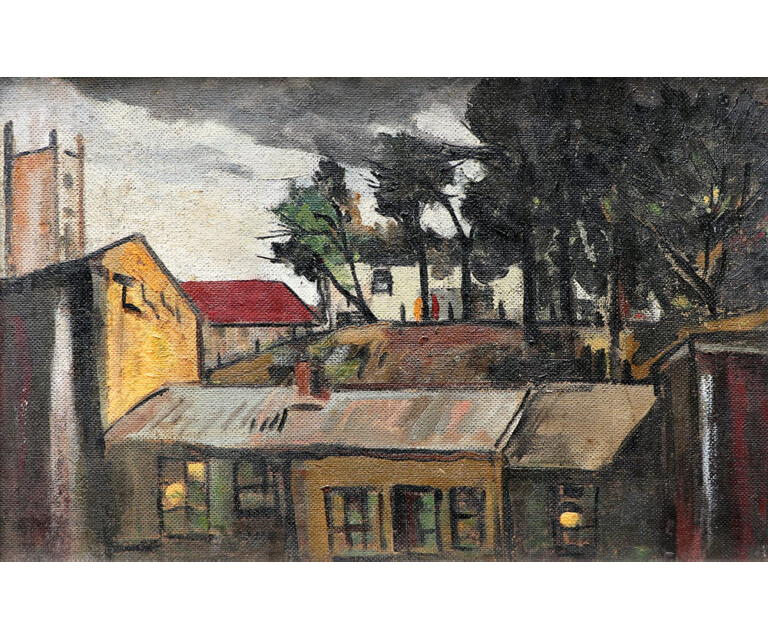
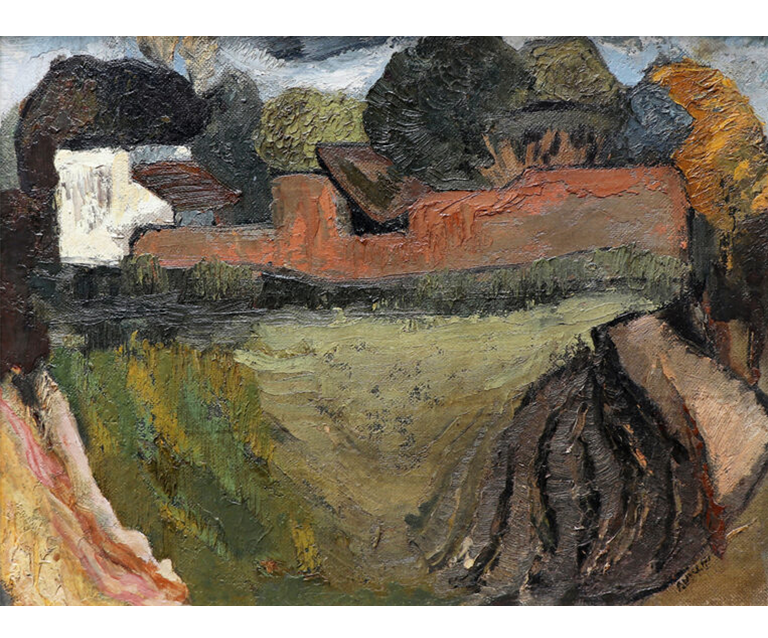
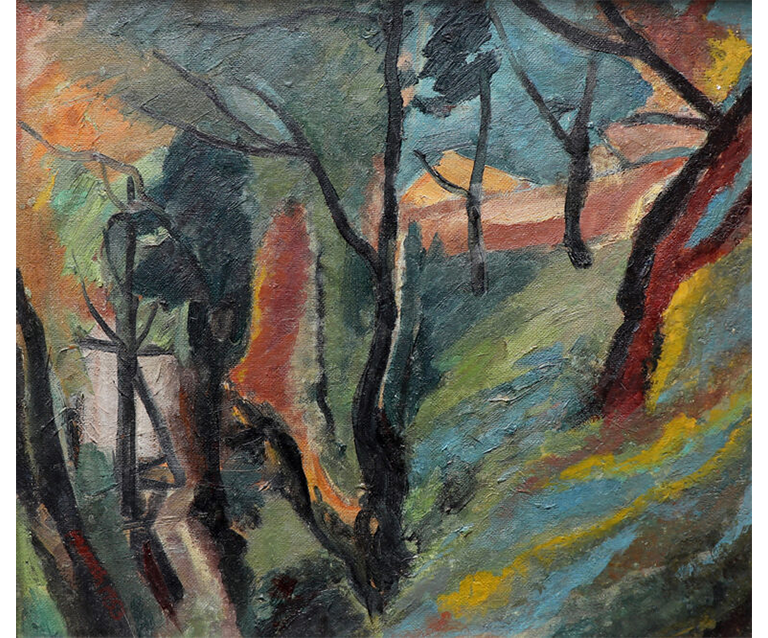
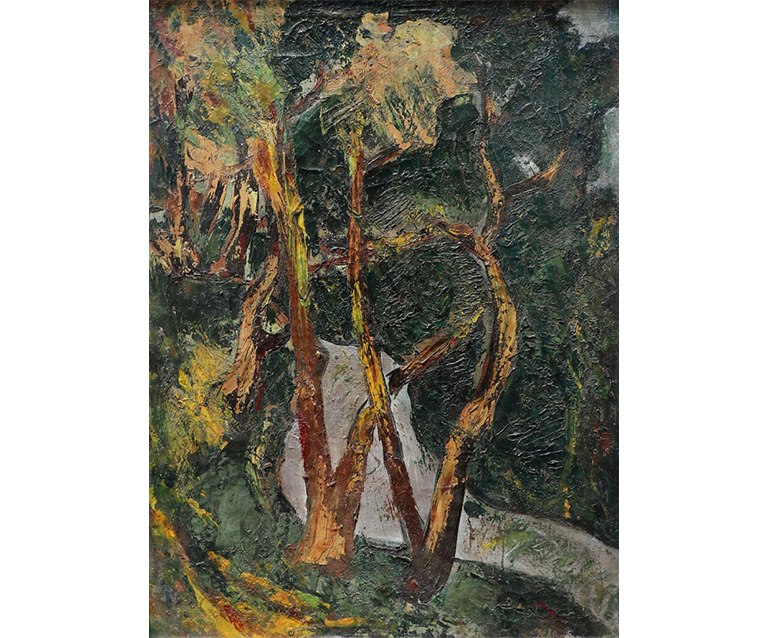
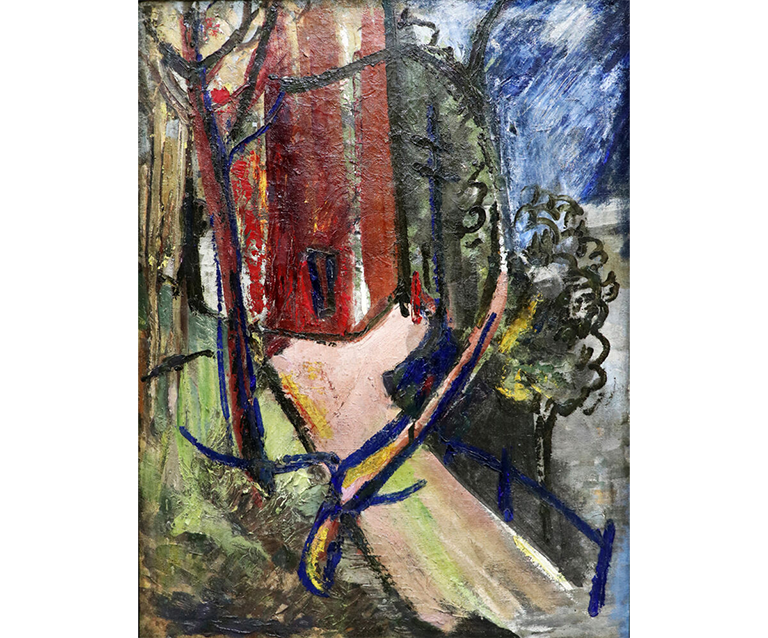
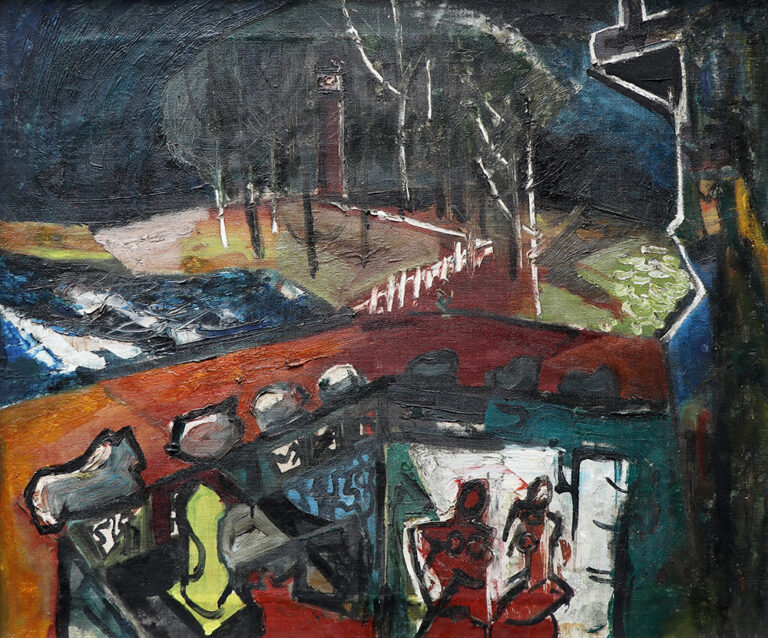
Born in Simla on 28 August 1931, Avinash Chandra studied painting at Delhi Polytechnic, where he also taught for a few years; his students included Paramjit Singh and Arpita Singh, who would go on to make a name for themselves in later years.
Despite two successful shows in India, Chandra was dissatisfied with the art scene in the country, and in 1956 moved to the United Kingdom, following his artist wife, Prem Lata, who was studying there on a scholarship. Before settling in London, he travelled widely through the U.S. and Europe, studying the language and technique of Vincent van Gogh and Chaïme Soutine, and drawing inspiration from European city landscapes.
Throughout his career, Chandra’s recurrent theme remained the female body. He began with elegant line drawings which evolved through the 1970s into implicit, erotic, coloured drawings. Sexual imagery may have played a vital role in his art but was introduced as part of a much larger experience in a wider context. Employing the primitivist trope, Chandra often reduced female anatomy to shapes as though suspended in a space invaded by phallocentric forms.
Chandra was the first Indian artist to exhibit at one of the most important art events worldwide—Documenta in Kassel, West Germany, in 1964. Widely collected, especially by museums in the U.K., Chandra won fellowships in the 1960s from the John D. Rockefeller III Fund and the Fairfield Foundation.
He passed away in London on 15 September 1991.
“Those effects might be described as an attempt at the crystallisation of forms that are significant and symbolic, beginning at pre-history and continuing on right through our times.”